What Craniosacral Therapy Actually Does During Pregnancy (And Why Your Baby Might Thank You Later)
Here's something that might surprise you.
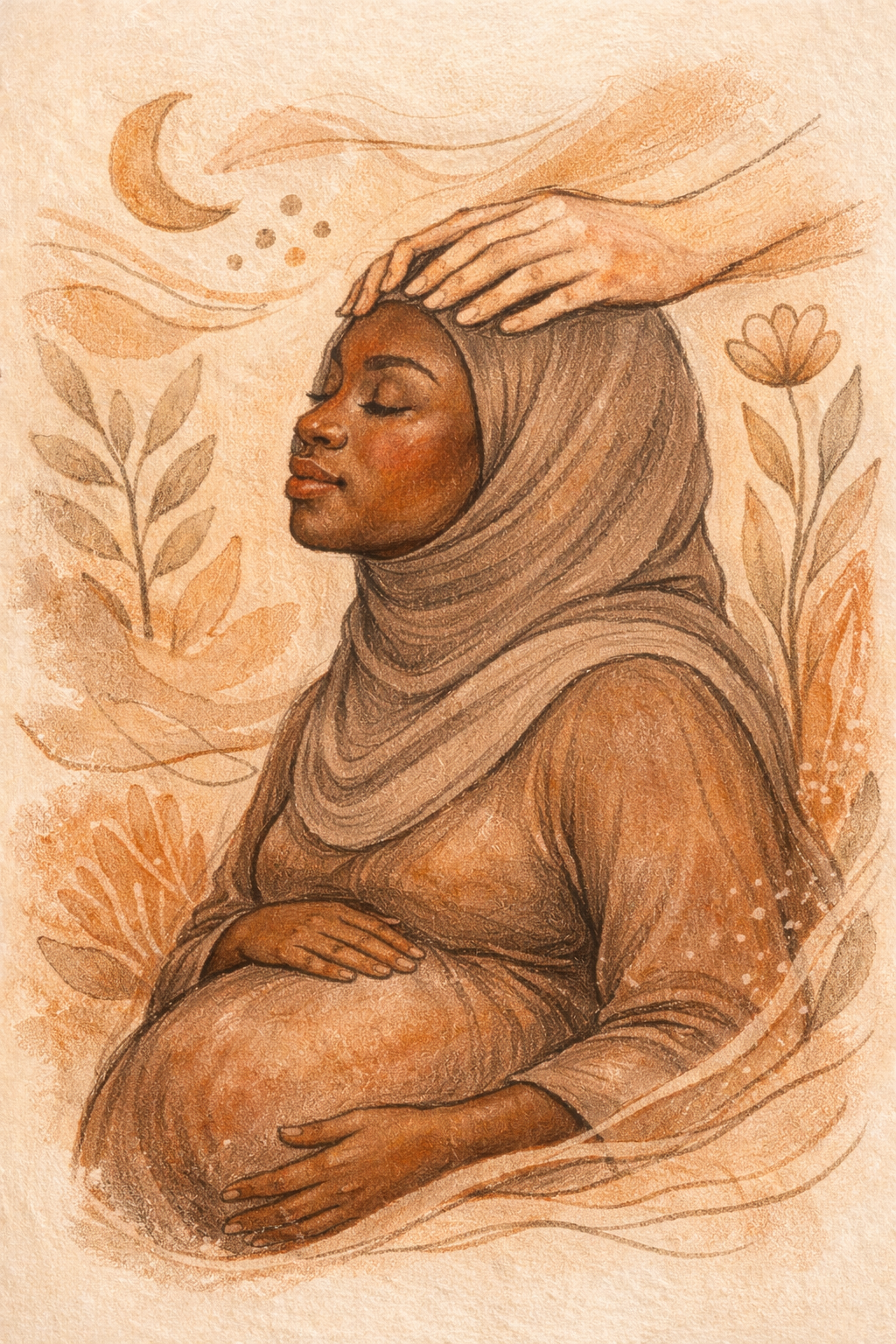
There's a therapy that involves almost no visible movement. The touch is so light you might wonder if anything is happening at all. You lie there, fully clothed, while someone rests their hands on your head or your lower back, and from the outside it looks like absolutely nothing.
And yet something profound is happening. Something shifts in your body that you can feel but might not be able to name. Your breathing slows down. A place that's been holding tension for weeks or months suddenly softens. You feel relaxed in a way that's different from a nap or a bath or even a massage. Deeper somehow. More complete.
It sounds like magic. I get that. But it's not magic. It's craniosacral therapy. And if you're pregnant and you've never heard of it, you're in very good company. Most people haven't. It's one of those quiet, powerful tools that tends to fly under the radar, overshadowed by flashier wellness trends that make bigger promises and deliver less.
I want to tell you about it because I think it deserves more attention, especially for people who are growing babies and preparing their bodies for birth.
So What Is Craniosacral Therapy, Actually?
Craniosacral therapy, which most people shorten to CST, is a gentle hands on approach that works with something called your craniosacral system. That's the membranes and cerebrospinal fluid that surround and protect your brain and spinal cord. This system extends from your cranium (your skull) all the way down to your sacrum (that triangular bone at the very base of your spine). Hence the name.
The therapy was developed in the 1970s by an osteopathic physician named John Upledger. He was assisting in a spinal surgery when he noticed something that other people had apparently missed: there was a subtle, rhythmic movement in the membranes surrounding the spinal cord. It wasn't the heartbeat. It wasn't breathing. It was something else entirely, a pulse that seemed to have its own intelligence.
He spent years studying this rhythm and developing techniques to work with it. What he found was that restrictions or imbalances in this system can affect the whole body, and that very gentle touch can help release those restrictions and restore balance.
During a CST session, you lie fully clothed on a comfortable table while the practitioner places their hands lightly on various parts of your body. Your head. Your sacrum. Sometimes your feet or your ribcage. The touch is incredibly light. We're talking about five grams of pressure, which is roughly the weight of a nickel. It's so subtle that if you're expecting a massage, you might feel like nothing is happening.
But things are happening. The practitioner is feeling for that craniosacral rhythm, noticing where it flows freely and where it's restricted. They're using that featherlight touch to invite your body to release tension it might have been holding for years. They're not forcing anything. They're not manipulating your bones or muscles. They're creating conditions for your body to find its own balance, in its own time.
And your body responds. Maybe not right away. Maybe it takes a few minutes to settle in. But then your breathing changes. Your shoulders drop. Something that's been gripped loosens its hold. You might feel warm or floaty. You might feel suddenly emotional for no reason you can name. You might fall asleep.
When the session ends, you often feel different in a way that's hard to articulate. Not just relaxed, though you are. Something has reorganized. Something has settled.
What Craniosacral Therapy Is Not (Let's Get This Out of the Way)
I want to be honest with you, because I think honesty matters more than hype.
There's so much noise in the wellness world, so many things making big claims with no evidence to back them up. It's smart to be skeptical.
So let me be really clear about what CST is not.
CST is not a replacement for medical care. If you have a medical condition, you need medical treatment. CST is a complementary therapy, which means it works alongside your prenatal care, not instead of it. Your midwife or your OB is still your primary provider. CST is one tool in the toolbox, not the whole toolbox.
CST is not a cure for pregnancy complications. If you develop preeclampsia or gestational diabetes or placenta previa or any other medical issue, craniosacral therapy is not going to treat that. It can help your body manage stress and discomfort while you receive appropriate medical care, but it's not medicine.
CST is not mystical energy work. I know some practitioners incorporate spiritual or energetic frameworks into their practice, and if that resonates with you, wonderful. But at its foundation, CST is based on anatomy and physiology. It's working with real physical structures in your actual body: membranes, fluid, fascia, the nervous system. There's nothing you have to believe for it to work.
CST is not a guaranteed anything. Bodies are complicated. Birth is unpredictable. What I can tell you is that many, many people find that CST helps their body feel more prepared and their nervous system feel more regulated. That's meaningful, even if it's not a guarantee.
What I can also tell you is that CST has been practiced for decades, that many skilled practitioners have seen profound results in their clients, and that sometimes our lived experience with something runs ahead of the research that will eventually catch up to it. You get to decide how much weight to give all of that.
Why This Matters During Pregnancy
Pregnancy is one of the most extraordinary things a body can do. Over the course of nine months, your body completely reorganizes itself to grow and sustain another human being.
Ligaments loosen to make room for a baby and prepare for birth. Organs shift and compress as your uterus expands. Your blood volume increases by about 50 percent, which means your heart is pumping significantly more blood with every beat. Hormones that normally hum along quietly in the background are suddenly conducting a full symphony, affecting everything from your mood to your digestion to how your joints feel.
All of this is normal. All of this is healthy. Your body knows how to do this; it's been doing it for hundreds of thousands of years.
And also, all of this can create discomfort and tension that accumulates over time. Your lower back aches from the shifting weight. Your hips feel tight because your pelvis is reorganizing. Your shoulders creep up toward your ears because stress has to live somewhere. By the time you reach your third trimester, you might feel like your body is holding tension in places you didn't even know could hold tension.
This is where craniosacral therapy can help.
CST supports your body in adapting to all these changes with more ease. When your pelvis is shifting to accommodate a growing baby, CST can help the surrounding tissues stay supple and mobile rather than gripping and rigid. When your nervous system is working overtime processing all the changes and the emotions and the anticipation, CST helps it downregulate, shifting from that activated fight or flight state into the calmer rest and digest mode.
It's not about fixing something that's broken. It's about supporting something that's working really hard.
Research specifically on pregnancy has shown benefits for some of the most common discomforts. Lower back pain and pelvic pain affect up to 70 percent of pregnant people, according to the American College of Obstetricians and Gynecologists. That's a staggering number. And while CST isn't a magic cure, many people find that regular sessions significantly reduce their discomfort and help them move through pregnancy with more ease.
How Craniosacral Therapy Supports Birth Preparation
When you think about what labor actually requires from your body, it's a remarkable balance of strength and surrender.
Your uterus needs to contract powerfully and rhythmically. Your cervix needs to soften and open. Your pelvis needs to make space, bones shifting and spreading to allow your baby through. This dance between effort and release, between activation and letting go, is the essence of birth.
And this dance is much easier when your body isn't already holding chronic tension.
Think about it this way. If your pelvis has been gripping for months, if your sacrum is restricted in its movement, if your nervous system is stuck in high alert mode, your body has less available range. It's like trying to dance when you're already exhausted and wound tight. You can do it, but it's harder. There's less give.
CST specifically addresses the relationship between your cranium and your sacrum, and your sacrum is directly involved in how your pelvis opens during birth. When your sacrum can move freely, your pelvis has more mobility. When the tissues and membranes and fluid around your spine are balanced and unrestricted, your whole system has more flexibility to do what it needs to do.
There's also the nervous system piece, which I think is actually the most important part.
Going into labor with a regulated nervous system is different from going in already maxed out. A regulated nervous system can toggle between states. It can be activated when it needs to be and rest when it needs to rest. It can handle intensity without getting stuck in intensity. It has resilience.
CST builds that capacity. Each session is an opportunity for your nervous system to practice downregulating, to remember that it knows how to be calm even when a lot is happening. The more you practice that during pregnancy, the more accessible it is during birth.
I'm not saying that craniosacral therapy will give you an easy labor. I don't know what your labor will be like, and neither does anyone else. But I am saying that preparing your body and your nervous system through something like CST is one of the best things you can do to meet whatever your birth brings.
What About Your Baby?
Here's something that I find really remarkable about craniosacral therapy during pregnancy: it's not just for you.
Your baby is living inside your body. They're surrounded by your tissues, floating in your fluid, affected by your hormones and your stress responses and your nervous system state. When you're tense, your baby experiences that tension. When you're flooded with stress hormones, those hormones reach your baby too.
And the reverse is also true. When you receive craniosacral therapy, when your body settles and softens and your nervous system downregulates, your baby experiences that shift. They feel you relax. They benefit from the calmer hormonal environment. They get the message that things are okay.
There's something beautiful about that. The care you give yourself during pregnancy is also care for your baby. You're not separate yet. What nourishes you nourishes them.
And then there's what CST can do for babies after birth.
The birth process, even when it goes smoothly, is intense for babies. They experience pressure they've never felt before. Their heads mold and shape to fit through the pelvis. They navigate twists and turns and compressions. And even though their bodies are designed for this, sometimes it creates subtle tensions that linger.
You might notice this as feeding difficulties, a baby who has trouble latching or seems uncomfortable in certain positions. You might notice it as colic or general fussiness that doesn't have an obvious cause. Sometimes there's a favored head position, or a body that seems to curve more to one side.
Craniosacral therapy for newborns can help address these patterns. And it's even gentler than the already gentle adult version. The lightest possible touch, following the baby's cues completely, never forcing anything. Babies often relax deeply during sessions, sometimes nursing or sleeping through the whole thing.
At Fruit of the Womb, CST for your newborn is included in your postpartum care. It's one more way of supporting both of you through this huge transition.
What a Session Actually Looks Like
Maybe you're curious now but still not quite sure what you'd be signing up for. Let me walk you through what actually happens.
You arrive and spend a few minutes talking with the practitioner about how you're feeling. What's going on in your body. Any areas of discomfort or tension. Any big emotions you're moving through. This helps the practitioner understand where to focus, but it also helps you arrive, transitioning from whatever you were doing before into this quieter space.
Then you lie down on a comfortable table, fully clothed. As your belly grows, you'll have props to support you, maybe lying on your side or with cushions under your knees. The practitioner makes sure you're comfortable, because comfort matters for your body to be able to release.
And then the hands on work begins. The practitioner places their hands lightly on you. Your head. Your sacrum. Maybe other places as the session unfolds. The touch is so light you might barely feel it at first.
And then you wait. Nothing seems to be happening. You might feel a little restless, wondering if this is really doing anything. That's normal. Give it time.
At some point, something shifts. It might be subtle. A deeper breath. A softening somewhere. A feeling of warmth or heaviness or lightness. You might feel suddenly emotional, tears springing up for no reason, or a wave of something moving through you. You might just feel profoundly relaxed, more relaxed than you've felt in a long time. Some people drift into sleep.
The practitioner is paying attention to your body the whole time, tracking that craniosacral rhythm, noticing where things are opening up, following your body's lead about where to go next. The session typically lasts 45 minutes to an hour.
When it's done, you'll take some time to come back, to let yourself reorient before getting up. You might feel a little spacey or dreamy. That's normal too.
The effects of CST often continue unfolding over the following days. You might sleep better. Aches that have been bothering you might diminish. You might feel more emotionally resilient, more able to handle stress without getting overwhelmed. It's not always dramatic. Sometimes it's subtle. But something has shifted, and your body knows it.
A Note on Safety
Craniosacral therapy is generally very safe during pregnancy. The touch is so gentle and non invasive that there's very little risk of anything going wrong.
That said, there are a few situations where you should talk to your healthcare provider before receiving CST. If you have a history of blood clots, if you've had a recent head injury, or if you have certain neurological conditions, it's worth having that conversation first.
As with any therapy, communication is key. A skilled practitioner will ask about your health history, will check in with you throughout the session, and will adjust their approach based on your body's responses. If something doesn't feel right, you can always speak up.
Finding Craniosacral Therapy in Your Prenatal Care
One of the things I love about the care at Fruit of the Womb is that craniosacral therapy isn't treated as an add on or an extra or a luxury upgrade. It's woven into the prenatal care because it's understood as a valuable part of supporting pregnant people and their babies.
Nets is a Registered Craniosacral Therapist, which means she's completed extensive training in this modality. And CST sessions are included in your care: one session each trimester, plus a postpartum session for both you and your baby. You don't have to seek it out separately or pay extra for it. It's just part of what you receive.
If you're curious about what craniosacral therapy could offer your pregnancy, if something in this article has resonated with you, consider scheduling a free consultation. Come meet Nets. Ask your questions. See what this kind of care feels like.
Your body is already doing something remarkable. It's growing a whole human being from scratch. CST is simply a way of supporting that process, one gentle touch at a time.
Frequently Asked Questions
Is craniosacral therapy safe in the first trimester?
Yes. CST is gentle enough to be safe throughout pregnancy, including the first trimester when everything feels so new and fragile. Some practitioners prefer to wait until after 12 weeks simply because the first trimester has a higher baseline miscarriage risk, and they don't want anyone to falsely associate a session with a loss that was going to happen anyway. But there's no evidence that CST causes any problems in early pregnancy. If you want to receive it in your first trimester, that's completely fine.
How is craniosacral therapy different from massage?
This is a really common question, and it makes sense because they're both hands on therapies that help you relax. But they're actually quite different in their approach and goals.
Massage works primarily with your muscles. The therapist uses various levels of pressure to release muscle tension, increase circulation, and help your body feel less tight and sore. It can feel really good and has lots of benefits.
Craniosacral therapy works with your craniosacral system, which is the membranes and fluid surrounding your brain and spinal cord. The touch is much, much lighter than massage, about five grams of pressure compared to the pounds of pressure you might experience in a deep tissue massage. And the goals are different: rather than targeting specific muscle tension, CST is working with your nervous system and fascial restrictions on a whole body level.
Some people love both and receive them for different reasons. They're complementary, not competing.
Will I actually feel anything during the session?
Everyone experiences CST differently, and there's no right or wrong way for it to feel.
Some people feel warmth or tingling or a sense of release as things shift. Some people feel deeply relaxed, almost like they're floating. Some people get emotional, which can be surprising but is completely normal. Some people fall asleep.
And some people don't notice much during the session itself but feel different afterward. Better sleep that night. Less tension in their body over the following days. More emotional equilibrium. All of these responses are normal and valid.
If you don't feel anything dramatic during your first session, that doesn't mean it's not working. Bodies have different levels of sensitivity, and sometimes the changes are subtle enough that you notice them more in their effects than in the moment.
How many sessions do I need?
There's no magic number. At Fruit of the Womb, the care includes one CST session per trimester plus a postpartum session for you and your baby. That's a good foundation for most people.
Some clients choose additional sessions because they're working through specific issues and want more support. Others just really enjoy the benefits and want more frequent sessions. And some people find that the included sessions are exactly enough.
It really depends on your body, your pregnancy, and your goals. You don't have to figure it out in advance. Start with what's included and see how it goes.
Tori T is a writer who partners with birth workers to share their wisdom with the families who need it most.
Sources: Upledger Institute International. "What is CranioSacral Therapy?" UI.edu. Journal of Bodywork and Movement Therapies. "Craniosacral therapy: A systematic review." 2019. American College of Obstetricians and Gynecologists. "Low Back Pain During Pregnancy." ACOG.